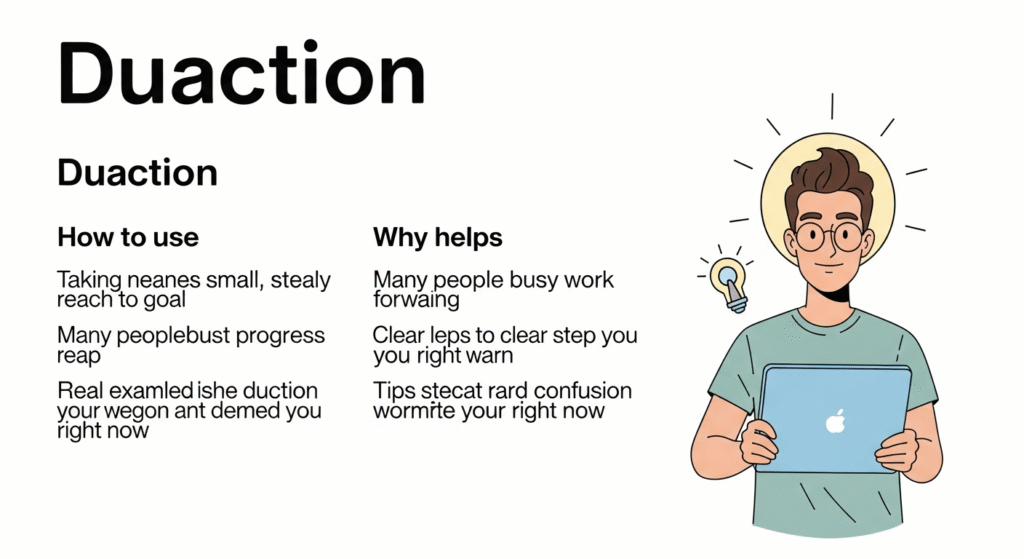

duaction is a new word for a simple idea. It mixes doing and action. Duaction means taking small, steady steps to reach a goal. Many people confuse busy work with progress. Duaction is the opposite. It focuses on clear steps that move you forward. In this article, you will learn what duaction is, how to use it, and why it helps. I will share real examples and tips you can try right now. This introduction sets the stage for deeper ideas. Read on to learn how duaction can change the way you learn, work, and grow.
What is duaction? A clear, short definition
Duaction is doing with purpose. It is not random effort. It is small actions tied to one clear aim. When you plan one small step and finish it, you practice duaction. The idea is easy: break big tasks into tiny ones. Then do one tiny task at a time. This makes big goals feel possible. I use duaction every day. It helps me finish projects without stress. Many people find it friendlier than long to-do lists. Duaction keeps energy steady and avoids burnout.
Why duaction works: the science and the simple truth
Duaction works because of focus and habit. The brain likes small wins. Each small done thing builds confidence. Over time, these wins stack into big change. Duaction also uses routine. Routine makes decisions easy. When you plan small actions, you cut the time spent choosing what to do. This saves willpower. Many studies show that habits beat short bursts of effort. Duaction is a habit design. It uses clear steps, repetition, and small rewards. That is why it works so well.
Who can use duaction: everyone, really
Duaction fits students, workers, parents, and creators. Kids can use it for homework. Adults can use it for work tasks. Teams can use it to finish projects faster. Athletes can use it for daily training steps. The method is simple and flexible. You do not need a lot of tools or time. Duaction can be used in five minutes or five hours. It grows with you. Start small and build. If a child learns a new word by practice, that is duaction. If a team ships a feature one small task at a time, that is duaction too.
How to start duaction in 4 easy steps
Step one: pick one clear goal. Step two: break it into tiny tasks. Step three: pick one tiny task to do now. Step four: finish it and mark it done. Repeat daily. That is the core loop of duaction. Each loop takes little time but gives a small win. Use a notebook or an app to note each tiny task. Keep tasks simple. For example, instead of “write report,” make a task “write one paragraph.” This makes starting easy. Do this for a week and you will notice change.
Duaction examples: real and practical
Imagine you want to learn piano. Instead of one hour a day, you do two 10-minute focused tasks. First, practice scales for ten minutes. Next day, practice chord progressions for ten minutes. Over weeks, skill grows fast. Another example: cleaning your house. Pick one drawer and tidy it for ten minutes. Do this every day. In a month, many parts of the house are tidy. These small, focused acts are duaction in action. The secret is tiny, focused steps that add up.
Tools and habits that support duaction
Some tools can help duaction. Use a simple timer. Use a list that shows small tasks. A habit tracker helps show progress. But tools are not the heart of duaction. The heart is the clear tiny steps. Start with a pen and paper if you like. Keep tasks short and specific. Use simple reminders. Set a “start now” rule to avoid delays. Over time, the habit becomes automatic. That is the aim. Tools can assist, but the habit of doing one small thing is what counts.
Common mistakes and how to fix them
A big mistake is making tasks too big. If a task takes hours, it feels heavy. Break it down. Another mistake is skipping the finish. Duaction needs a small done mark. Mark completion visibly. Also, avoid perfection traps. Small action beats perfect planning. If you fail one day, do one tiny step the next day. Finally, do not confuse busy work with meaningful steps. Each tiny task must lead to the big goal. Fix these problems and duaction becomes smooth and steady.
Measuring progress without pressure
Use simple measures to track duaction. Count small tasks done each day. Use a calendar with check marks. Note the time spent if you want. Keep measures kind and honest. The aim is growth, not guilt. If you did three small steps today, that is progress. Over weeks, these add up into clear results. Celebrate small wins, and you keep motivation. This gentle tracking keeps you on course without pressure.
Duaction for teams and leaders
Teams can use duaction for better flow. Break big projects into tiny work items. Let each team member pick one small task to complete each day. Share these wins in short updates. Leaders should reward progress, not just big launches. Duaction reduces waste and keeps momentum. It also helps teams feel competent. Small wins create trust and better communication. Teams using duaction often finish work faster and with less stress.
Duaction in learning and education
Students learn faster with duaction. Teachers can assign micro-tasks. For example, a reading lesson can include three small tasks: read one paragraph, summarize one sentence, and write one question. This reduces overwhelm. Students feel success often. That builds confidence and curiosity. Parents can support duaction by praising small efforts. This approach turns study time into a friendly and steady habit. Duaction helps learners stay curious and keep moving ahead.
My personal note on duaction — an honest take
I use duaction in writing. I set a tiny goal: write one paragraph. Then I write it without fuss. After a few paragraphs, the whole article flows. This helped me finish long projects calmly. I also use duaction when learning skills. Short, focused practice beats long unfocused sessions. My advice: try duaction for one week. Notice how small steps change your view. It is not magic, but it is powerful and kind.
LSI keywords and related ideas to include
Related words help search engines and readers. Use words like micro-task, habit loop, small wins, focused practice, daily routine, momentum building, task breakdown, goal stacking, and progress tracking. These ideas link to duaction and make the concept clear. When you write content about duaction, use these terms naturally. They help explain the method and give practical hints. Keep the language simple so anyone can follow.
How to make a duaction plan (template)
Make a duaction plan in four parts. Part one: goal statement. Part two: list tiny tasks. Part three: schedule small daily slots. Part four: track and reflect weekly. Each tiny task should take less than 20 minutes. Write the plan in one page. Update weekly to stay real. Example goal: finish a short ebook. Tiny tasks: outline one chapter, write 300 words per day, edit one page. This plan shows how duaction turns big work into daily steps.
Duaction vs. deep work — are they different?
Duaction and deep work are both useful. Deep work is long focus without interruption. Duaction is small focused steps. Use both. For big creative tasks, start with duaction to build momentum. Then use deep work for longer stretches when you need deeper focus. Duaction helps start the engine. Deep work drives the car when you need long concentration. Combining them gives steady progress and strong results.
Common questions people ask about duaction
People often ask: “Is duaction just busy work?” The answer is no. Duaction means tiny tasks that matter. Another question: “How long until I see results?” Small wins appear quickly. Bigger results need weeks or months. A third question: “Can duaction be used at work?” Yes, it fits many jobs. The key is clarity and finish. Keep tasks small, tied to goals, and clearly marked done. These rules make duaction real and helpful.
Tips to keep duaction fun and sticky
Make duaction playful. Add small rewards. Use a color sticker for each finished task. Turn it into a game with friends. Keep the rewards small and healthy. Also, change the tiny tasks to keep variety. When a habit feels stale, try a new tiny task. Lastly, share wins with someone. Social support makes duaction more fun and more likely to stick. These small design choices keep the method alive.
How to teach duaction to others
Start with a short demo. Show one small task and finish it together. Use a visible check mark to celebrate the finish. Ask learners to pick their tiny task and finish it in five minutes. Repeat often. Use simple tracking and praise. Keep lessons short and kind. Over weeks, learners will adopt the habit. Teaching duaction is about modeling small wins and making the process clear and safe.
Long-term benefits of duaction for life and work
Over months, duaction builds skill, confidence, and momentum. Small learning sessions add up to strong knowledge. Small daily work items finish big projects. Duaction reduces anxiety and makes goals feel manageable. It also teaches patience and consistency. Over time, people who practice duaction see steady growth in many areas. That is the deep value of the method: reliable progress without burnout or drama.
Conclusion
Duaction is simple, kind, and powerful. It asks for small steps done with purpose. Start with one tiny task this hour and mark it done. Keep a gentle plan and track small wins on a calendar. Over time, you will see big change. If you want, try a seven-day duaction challenge. Notice how small steps change your habits. Share your wins with a friend. Duaction is ready when you are. Small action, steady growth. Simple and true.
FAQs
What exactly counts as a “tiny task” in duaction?
A tiny task is one clear step that takes less than twenty minutes. It should be specific and easy to finish. For example, write one paragraph, sort one drawer, or practice one scale. The task must lead to a bigger goal. Keep the wording crisp so you know when it is done. Tiny tasks make starting easy and keep momentum steady. Use them every day for best results.
Can duaction help with big creative projects?
Yes. Big creative projects break into many tiny tasks. Start with an outline, then write one scene or paragraph at a time. Use the duaction loop: pick a tiny task, do it, and mark it done. Over time, these steps build into a finished work. Duaction removes the fear of starting. It also keeps energy steady, so creative work becomes less painful.
How often should I do duaction steps?
Daily is best, even for five minutes. Consistency beats long, rare sessions. A small daily habit keeps momentum. If daily is too much, aim for three times a week. The key is repeat and finish. Short, steady practice adds up faster than rare bursts. Make it simple and kind.
Will duaction take more time than normal work?
No. Duaction uses the same time but divides it into clear steps. It can save time by cutting wasted decision-making. When you know the next tiny task, you start faster. Over weeks, duaction often speeds progress. It reduces stress and improves quality, which can save time in the long run.
Can teams use duaction for complex projects?
Absolutely. Teams can split big work into tiny items. Each person picks small daily tasks. Share progress in short updates. This creates steady flow and fewer surprises. Duaction helps teams stay aligned and celebrate small wins. It reduces bottlenecks and keeps morale high.
How do I stop when I feel stuck using duaction?
When stuck, shrink the task more. If writing a page feels hard, write one sentence. If that feels hard, copy a sentence from notes and rework it. Ask a friend for feedback or use a timer for five minutes. Small, focused steps break the block. Remember: progress is not perfect. Keep the habit gentle and repeatable.